
How does China pay? - The companies behind WeChat Pay and Alipay
Continuous economic growth is now synonymous with the People's Republic of China. Since the beginning of economic reforms in 1978, its Gross Domestic Product increased by 9,5% annually until 2018. Now China's government is talking about a new form of economic growth less driven by state investments and more focused on consumption, service, and innovation through technology.
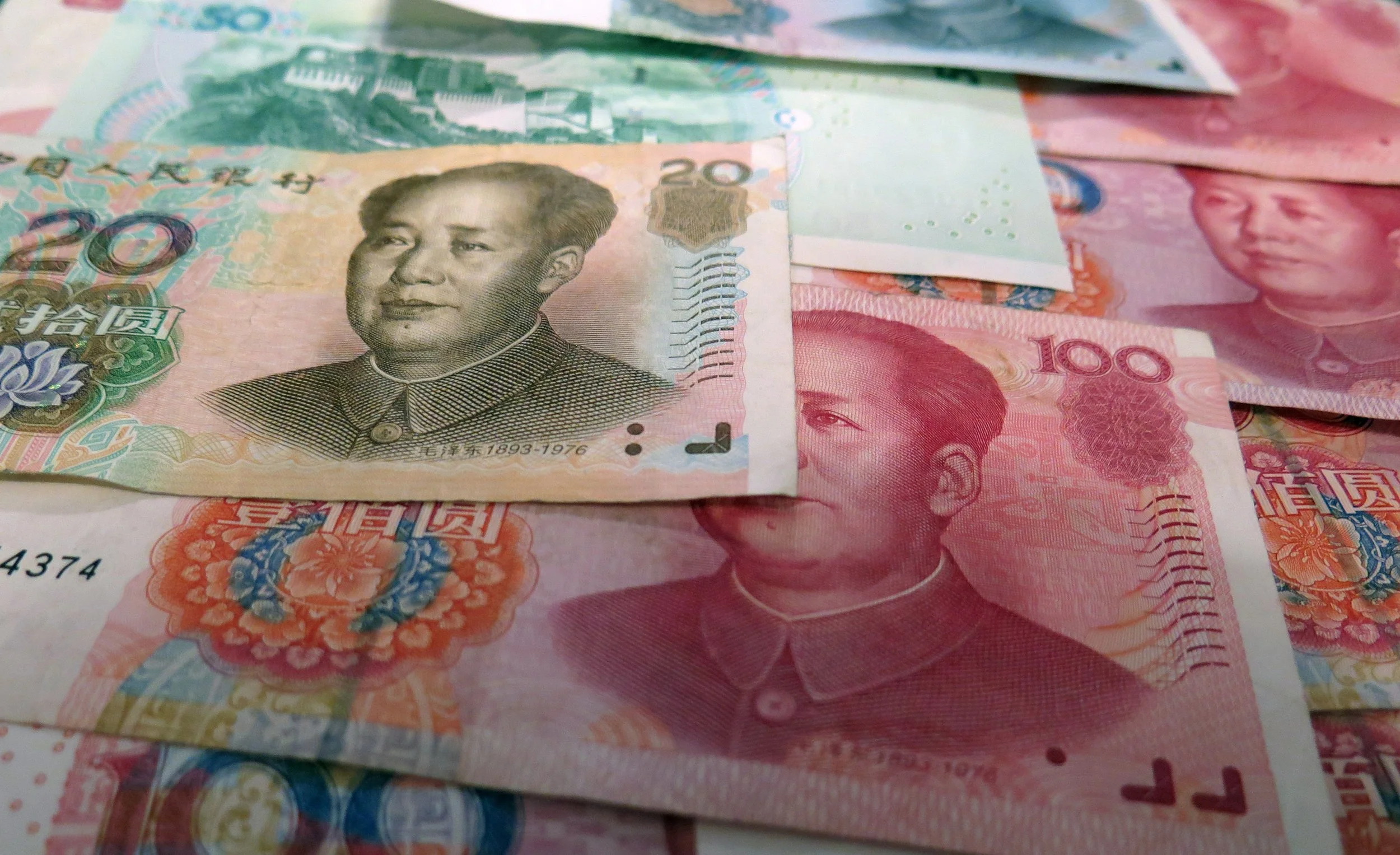
Despite a unified political voice, it was the decentralization of economic power that, besides no longer being isolated from the world market, put those economic reforms into motion. Forty years later, everyone in the republic is still paying with Yuan, also known as the Renminbi, but the payment methods have changed. Advanced digitalization spread smartphone applications such as Alipay or WeChat Pay throughout the country, pushing cash from its throne. The majority of the Chinese population has connected their bank card to any of these apps, using their phones to buy groceries or pay the bills. It is user-friendly, as transactions on the internet require the simple input of a PIN code. For in-store purchases clients present QR codes, which renew themselves at short intervals to prevent malpractice.
The rise of such mobile payment options is unprecedented but easily explained as China is missing the infrastructure for bankcard payment. Such cards exist, but have never established themselves as anything more than a means to withdraw money and identify at banks. The expansion of digital payment methods for other purposes has made them even more attractive to users. WeChat Pay or Alipay users can install micro-applications offering a variety of functions. Among the most popular ones are the following:
(a) Order food for delivery or take-out
(b) Pay bills in restaurants
(c) Use public transportation
(d) Order train and flight tickets
(e) Rent bikes or rental cars
(f) Manage loyalty cards from different companies
A newer function, added during the pandemic, is storing PCR (Polymerase Chain Reaction) test results and the health code. The latter is a system similar to a traffic light that shows whether or not you have been in contact with an infected person and are free to travel.
Quite surprising about WeChat Pay and Alipay is that not one of them was able to enforce a monopoly. Instead, it comes down to a customer's preference. The origins of both platforms seem to offer a reasonable answer. WeChat Pay was born out of a necessity to enable in-app payment and money transfer between private users. AliPay, on the other hand, has always focused more on the payment process in e-commerce.
Tencent Holdings Ltd. and WeChat Pay
Tencent Holdings Ltd. is a technology and entertainment company founded by Zhang Zhidong and Ma Huateng in 1998. With a market capitalization of 734,5 billion dollars, it is one of the largest and most valuable corporations worldwide. 70% of China's video game industry belongs to Tencent, and it is officially the biggest game developer in the world. In 2011, they invested 400 billion dollars in Riot Games, the developer of League of Legends, one of the most famous multiplayer games ever, making them the majority shareholder. Other developers they have invested in are Epic Games, Activision Blizzard, Funcom, and Frontier Development. In 2017, Tencent drew international attention to itself by buying a 5% share of American car manufacturer Tesla.
On the mainland, Tencent is most famous for its chat software WeChat. 1,2 billion users rely on the app for communication, meaning more than 78% of Chinese people aged 16-64 use it. Over time, the developers added many more functions beyond basic chatting. The introduction of a digital wallet, for example, resulted in Tencent's WeChat Pay now being the second most prominent payment method in the country. It is a common lunar new year tradition to exchange small, red envelopes filled with money, known as hongbao. During the new year celebrations of 2014, WeChat digitalized this custom, eliminating the necessity of being geographically close to the one you're endowing with an envelope. It was a clever marketing trick that attracted many new clients bringing the slowly dawning monopoly of Alipay to a screeching halt.
Alibaba Group Holdings Ltd. and Alipay
Before WeChat Pay first recorded one billion users in 2018, Alipay dominated the market for digital payment methods. It is part of the Alibaba Group, an IT company founded by Jack Ma in 1999. Internationally, the Alibaba Group is most famous for its C2C-platform Taobao, also known as the Chinese eBay. In 2018 it was one of the most visited websites globally and is still China's biggest platform for online shopping. Shortly after its establishment, however, customers already expressed security concerns. Who guarantees the dispatch of goods by a private vendor after successful payment? Alibaba's answer to those concerns was Alipay, an application storing a client's money, forwarding it once a buyer confirms the arrival of their purchased goods. The service became available to other companies in 2004, way before it became the payment method used by 81% of the Chinese people in 2020.
Shortly after that, however, Alipay became the victim of a government-ordered investigation, as the company's supremacy had long been a thorn in the party's flesh. It primarily targeted the financial power of Alipay's affiliated company Ant Financial and its two micro-apps, Huabei and Jiebei. Via these apps, private individuals and businesses can acquire loans digitally at low rates and with credit assessment only taking a few seconds. Together Alipay and Ant Financial control one of the most important financial ecosystems of the People's Republic. According to the government, this supremacy could threaten the stability of China's broader financial system. Therefore, the party appointed state-owned companies and banks as supervising stakeholders to decrease their power. In addition, it imposed a fine of about 2,8 billion dollars for the alleged abuse of power in e-commerce activities. In a later step, the applications Huabei and Jiebei will be separated from Alipay and forced to operate independently. Furthermore, all user data will have to be transferred to a government-owned databank so that a separate, partly government-run company can carry out the credit assessment.
Despite radical attempts to curb Alipay's influence and power, whether or not its status as one of the most important payment methods will be affected by this is to be determined.
The future is in the party's hands
In 2021, the People's Bank of China launched the e-CNY (e-Chinese Yuan), making China the first government to introduce a digital currency. Besides the interest in offering an alternative to Bitcoin and co., it is supposed to secure the Yuan as China's most important currency for the years to come. The consequences for Alibaba and Tencent are unknown for now. However, the e-CNY is a currency used similar to cash and not a digital payment method. Its anonymized usability might be especially interesting for those having voiced security concerns about WeChat Pay and Alipay. In addition to that, the e-CNY offers more opportunities for the Chinese government to restrict the power of Alipay and WeChat Pay. At least on paper, as Mu Changchun, president of the research institute for digital currencies, reports, that the introduction of e-CNY has been dragging so far. The currency differs too little from already available and established alternatives for an adaptation to be lucrative. We can expect further incentives from the government to push the usage of e-CNY. But for now, Chinese consumption remains in the hands of the two technology giants Tencent and Alibaba. It's not just the ongoing growth of e-commerce that will strengthen their role. Both have been part of the development of the e-CNY, indicating that they might not be too worried about their position in China's financial system. Whatever the future looks like, the party will do its utmost to shape China's economic future to its vision.